

CONTENTS
10 Days in the South of France: The Full Route from Nice to Marseille
Check out our cabin bag collection
View All


Explore the CabinZero ADV Collection
View All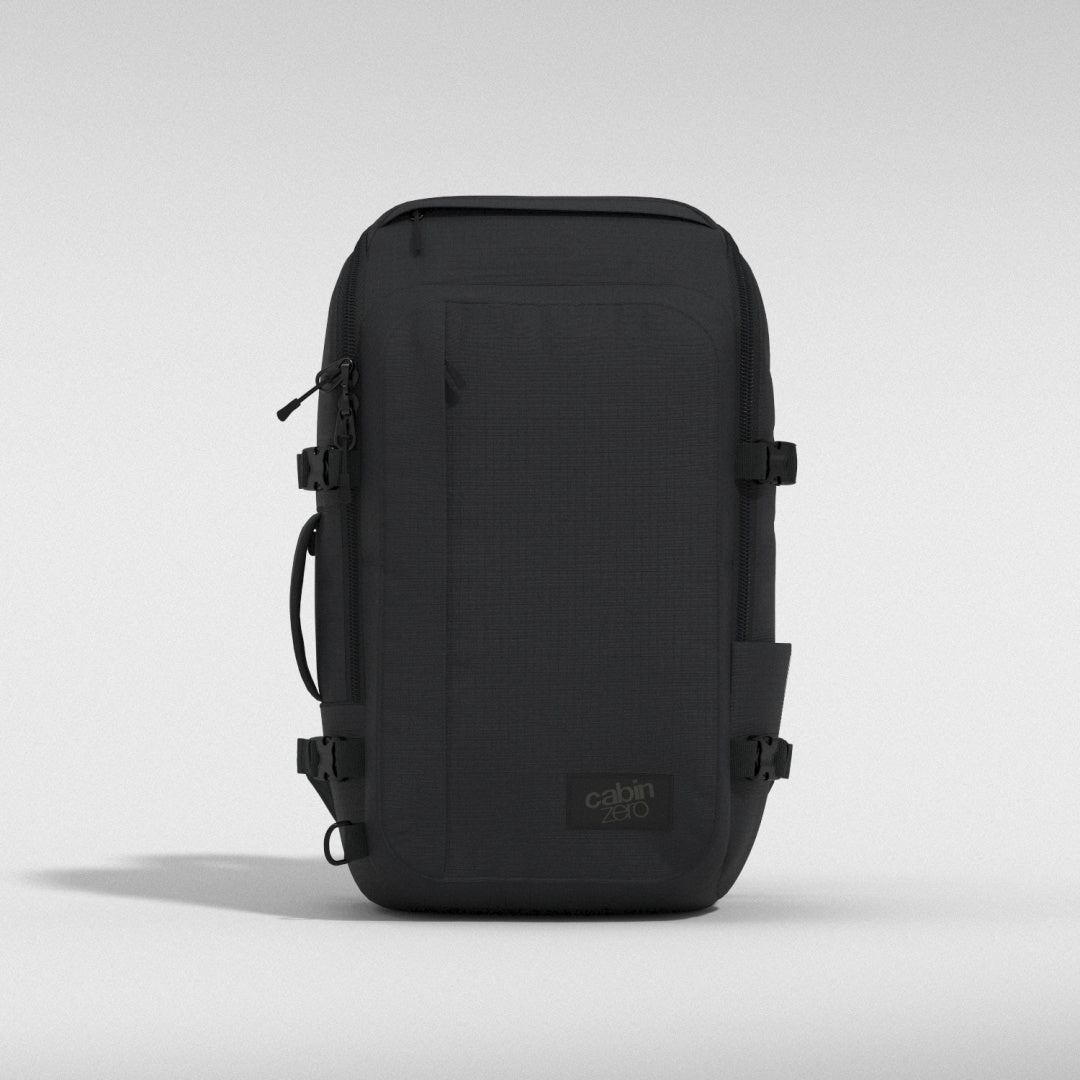


If you’re preparing your South of France itinerary for 10 days, then this article is everything you need. Are you wondering what the essentials are? Are you confused about all the rules and etiquette in France? Do you want to know where to stay and what to eat? Cabin Zero has answers to all of those questions right below. You’ll get to imagine your next journey in detail and discover what to expect. Without further ado, let’s jump right into the first part - essentials.

The perfect blend of Mediterranean beaches and historic Roman ruins. Photo by Mazur Travel - stock.adobe.com
Checklist Table
|
Category |
Before you go |
On the road |
Tips |
|
Transportation |
|
|
|
|
Accommodation |
|
|
|
|
Food |
|
|
|
|
Budget saving tips |
|
||
Is 10 Days Enough For The South Of France?
Ten days is enough for the French Riviera and Provence, but not for every major destination across southern France. You don’t have enough time for Languedoc, the Dordogne, or the Alps.
The mistake most first-time planners make is treating the South of France as one region rather than several, then trying to fit all of them into a single trip. The result is usually two nights everywhere and a lot of time lost on the road.
A realistic route should focus on two neighbouring regions and use no more than four or five accommodation bases.
This itinerary covers the Riviera, the Verdon Gorge, and Provence.
What Is The Best Way To Travel Around The South Of France?
There isn't a single best way to get around the South of France; there's a best way for what you're prioritising. Most people end up needing some mix of the two, especially for first-timers. This guide will cover exploring the South of France both by rail and car.
Rail and car
-
Best if: You are a first-time visitor wanting coast, villages and nature
-
Pros: Best overall variety and route logic.
-
Cons: Requires a hire car for the middle of the trip.
-
Good bases: Nice, Verdon, Avignon/Saint-Rémy, Marseille.
Rail only / no hire car
-
Best if: You want simplicity and city visits.
-
Pros: No parking, toll or driving concerns.
-
Cons: Must leave out Verdon and most Luberon villages.
-
Good bases: Nice, Avignon, Marseille.
Car only
-
Best if: You prefer rural Provence.
-
Pros: Maximum freedom outside the cities.
-
Cons: Least convenient around Nice and Monaco.
-
Good bases: Nice, Verdon, Aix, Avignon/Saint-Rémy, Marseille.
Whichever of the three you pick, notice what all of them have in common: you're never on one mode of transport for the whole 10 days. A flight in, a few days of trams and TER trains, a hire car for the middle stretch, then trains or a transfer again at the end.
A carry-on backpack from CabinZero is built for that switching. It's cabin-sized enough to skip the check-in queue on the way out, light enough to carry comfortably through a station change, and it goes on your back rather than needing to be lifted, wheeled or squeezed into a boot.
For a trip built around variety rather than one fixed mode of transport, it's one less thing to think about between Nice and Marseille.
Your 10-Day Itinerary to the South of France
|
Day |
Plan |
Transport |
Overnight |
|
1 |
Arrive in Nice; explore the Old Town and Promenade des Anglais |
Airport tram and walking |
Nice |
|
2 |
Èze Village and Monaco |
Bus to Èze; bus or rail onward to Monaco |
Nice |
|
3 |
Antibes Old Town, market and beach; coastal walk optional |
TER train |
Nice |
|
4 |
Collect car and drive to Verdon; do viewpoints or a short lake activity |
Car |
Moustiers-Sainte-Marie or La Palud-sur-Verdon |
|
5 |
Full Verdon day: choose hiking or lake activities |
Car, activity operator or seasonal shuttle |
Same base |
|
6 |
Verdon to the Luberon; visit a maximum of two villages |
Car |
Avignon |
|
7 |
Avignon: Palais des Papes, historic centre and Rhône |
Walking/local transport |
Avignon |
|
8 |
Choose Pont du Gard and Nîmes or Arles and Camargue |
Car |
Avignon |
|
9 |
Visit Aix-en-Provence on the way to Marseille, or drive directly to Marseille for more city time |
Car |
Marseille or airport area |
|
10 |
Departure from Marseille |
Airport transfer |
— |
Where to base yourself
|
Where |
How Long |
|
Nice |
3 nights |
|
Verdon |
2 nights |
|
Avignon |
3 nights |
|
Marseille |
1 night |
|
Depart |
Last day |
Days 1–3: Nice and the French Riviera

Admiring this beautiful panoramic view should be on your bucket list. Photo by xbrchx on Adobe Stock
-
Day 1: Nice Airport → central Nice → Vieux Nice → Castle Hill → Promenade des Anglais
-
Day 2: Nice → Èze Village → Monaco → Nice
-
Day 3: Day trip to Antibes
The morning after landing at Nice Airport, take Tram line 2 to Vieux Nice (Old Town). The tram station is right outside Terminal 1 or 2, and the entire 8km journey takes about 30-45 minutes. Then get off at Garibaldi or Port Lympia stations on the edge of Old Town, check into your hotel (if it's time), and rest to prepare for your afternoon sightseeing in Old Town.
What to do
-
One of the must-see places in Old Town is the Cours Saleya flower market. There are so many things to do here, the highlight being looking out for Chez Thérésa to grab a cone of socca. Castle Hill is a popular spot for panoramic views of the city and the sea.
-
Èze Village is a medieval town perched high on a cliff with incredible sea views. From Nice, you can take Bus #82 or #602, which takes about 30 minutes.
-
Monaco is only about a 15-minute train ride from Èze Village (but you need to take a regional bus or travel down to Èze-sur-Mer station before catching the train). Be sure to explore the Prince's Palace area. At 11:55 AM, the Changing of the Guard ceremony will be performed by the Compagnie des Carabiniers du Prince.
-
Now, a must-do activity on your south of France itinerary, whether you're a speed enthusiast or not, is a visit to the Formula 1 harbour track. However, if you want to combine a visit to the F1 track with a visit to Prince's Palace, make sure to do so during race week (Monday to Wednesday), as the palace will be closed on race day. Book tickets online through Ticketing Prince's Palace to have more control over your time.
-
On day 3, take a 30-minute train from Nice to Antibes. The entire Antibes region is a lush, pine-scented peninsula with multi-million dollar villas and the Sentier du Littoral, a breathtaking coastal walking path. July and August will be very crowded with tourists, so if possible, go in May, June, or September to enjoy the good weather and avoid the heavy tourist influx.
Days 4–5: Verdon Gorge

Verdon Gorge has stunning scenery. Photo by Nikokvfrmoto on Adobe Stock
-
Day 4: Nice → Verdon region → Moustiers-Sainte-Marie or La Palud-sur-Verdon
-
Day 5: A full day in Verdon Gorge
Starting on the fourth day of your South of France itinerary, you'll need a car for convenient transportation. Therefore, the first thing to do in the morning is pick up your rental car. You can rent a car by booking online through comparison sites like AutoEurope or major agencies like Sixt or Hertz.
There are 2 bases you can pick to rest for the next 2 nights:
|
Base |
Best for |
Drawback |
|
Moustiers-Sainte-Marie |
Lake Sainte-Croix, paddling, village atmosphere and first-time visitors |
Less convenient for an early Blanc-Martel start |
|
La Palud-sur-Verdon |
Blanc-Martel Trail and gorge viewpoints |
Less convenient for a lake-centred day |
After arriving at your base of choice in the afternoon, spend some time at Moustiers or a nearby lakeside area.
On day 5, you’ll spend a full day for exploration. Verdon Gorge is Europe’s largest canyon with striking turquoise waters. Choose either the lake-and-viewpoints itinerary or the Blanc-Martel Trail. Do not attempt both in the same day.
Moustiers-Sainte-Marie - lake and viewpoints
For a first-timer, Moustiers-Sainte-Marie is often the better choice. Leave early to have the whole morning to kayak in the emerald canyon and take classic photos from the Pont du Galetas bridge.
La Palud-sur-Verdon - Blanc-Martel Trail
If you want to get into the canyon itself, tackle the famous Blanc-Martel Trail. The trail is approximately 16 kilometres one way and takes around six hours of walking.
However, it is not for beginners. The ground is rocky with metal stairways and tunnels at turns. Official guidance recommends at least three litres of water per person and notes that the route is unsuitable for young children, people with mobility limitations and those uncomfortable with exposed terrain.
Days 6–8: Luberon, Avignon and one regional day trip

The magnificent lavender fields are the highlight of your trip to Provence. Photo by Boris Stroujko on Adobe Stock
-
Day 6: Verdon → Roussillon → Gordes → optional Sénanque Abbey → Avignon
-
Day 7: Explore Avignon’s historic centre
-
Day 8: A day trip of your choice → Avignon
On the morning of Day 6, check out of your Verdon base and start heading north-west towards Roussillon. The drive itself is part of the day, not just a transfer, so there's no need to rush it.
-
From Moustiers-Sainte-Marie, it's about 100 km to Roussillon, roughly 1 hour 40 minutes along the D952 and D6.
-
From La Palud-sur-Verdon, add another 30–45 minutes to the same route.
-
From Roussillon, it's a short hop to Gordes, then on to Sénanque Abbey if you have the time, before the final leg to Avignon (about 40 km, 45–50 minutes from Gordes).
Base yourself in Avignon for three nights. Thus you don’t need to move hotels in between. You just need to unpack once and head out each morning without the hassle of checking out.
Parking your car in Avignon
Worth noting that Avignon's historic centre is largely pedestrianised, with narrow one-way streets that are more trouble than they're worth to drive.
Most would just park just outside or right under the ramparts instead. The underground car park at Palais des Papes is a short walk from the centre, or Parking des Italiens outside the walls runs a free shuttle in.
If your hotel is inside the walls, it's worth asking them directly, as many can point you to the easiest option or arrange access.
Keep the hire car with you for all three nights regardless, since you'll need it each morning for the day trips before returning to Avignon each evening.
What to do
-
Luberon Valley is the heart of Provence, famous for its hilltop villages and stunning vineyards. Two of the most famous and beautiful villages you shouldn't miss are Gordes and Roussillon.
-
The landscape transforms dramatically with the seasons; however, if you want to see the lavender in full bloom, aim for late June to mid-July.
-
Visitors often combine Gordes and Roussillon with a visit to Sénanque Abbey, which is surrounded by beautiful lavender fields.
-
On your drive to Avignon, watch the sunset over the Rhône River and the broken Pont d'Avignon bridge.
-
Palais des Papes is the largest Gothic palace in the world and a UNESCO World Heritage Site. Remember to buy a combined ticket (the global ticket) that includes entry to the Palace and the nearby Pont d'Avignon to save money.
Day trip

Pont du Gard - the highest Roman aqueduct bridge in the world. Photo by ecstk22 - stock.adobe.com
Day 8 is yours to spend as you like. Either slow down and enjoy Avignon at a different pace, or use the car for one of the following day trips:
Pont du Gard and Nîmes
-
Pont du Gard is the magnificent three-tiered Roman aqueduct and a UNESCO World Heritage Site.
-
Nîmes rounds out the trip with two of the best-preserved Roman monuments anywhere: the Arènes, an amphitheatre often compared to Rome's Colosseum, and the Maison Carrée, widely considered the most intact Roman temple left standing.
-
The two sit close enough together to walk between, so it's an easy pairing with Pont du Gard on the same day.
Arles and Camargue
-
Camargue plains and the ancient fortress town of Aigues-Mortes are nestled among magical pink salt lakes
-
Experience horseback riding or jeep tours to see flamingos and wild white horses.
-
Arles is compact and walkable, with its own Roman amphitheatre and the streets and cafés Van Gogh painted during his time in the town.
-
It's the day to try gardiane de taureau, a rich bull stew paired with nutty Camargue red rice.
Saint-Rémy-de-Provence and Les Baux-de-Provence
-
Saint-Rémy is where Van Gogh spent a year at the Saint-Paul de Mausole asylum, and it sits right next to Glanum, a well-preserved Roman and Hellenistic site that predates most of what you'll see elsewhere on this trip.
-
If your visit lands on a Wednesday, Saint-Rémy's weekly market is one of the better ones in the area.
-
Les Baux-de-Provence is a village built directly into a limestone ridge, with a ruined medieval castle at the top and wide views over the Alpilles.
-
Just below the village, the Carrières de Lumières turns a disused stone quarry into an immersive art show projected across the entire space.
Day 9: Aix-en-Provence and Marseille

What is the prettiest city in the South of France? Aix-en-Provence must be one of them. Photo by xbrchx on Adobe Stock
-
Day 9: Avignon → Aix-en-Provence → Marseille
Leave Avignon by mid-morning for the roughly 90 km drive to Aix-en-Provence. It should take about an hour on the A7, as long as the traffic is not too bad. This is a charming little city with a distinct atmosphere.
Spend a few hours exploring Cours Mirabeau, the historic centre and one local market or cultural attraction. After lunch, continue to Marseille, return the hire car and check into your final hotel.
If you want to skip Aix, drive straight to Marseille in about 1 hour 10 minutes (roughly 100 km via the A7 and A55). That gets you in by late morning, leaving the whole rest of the day in Marseille itself rather than splitting it across two stops.
Where to stay
Travellers with an afternoon flight on Day 10 can stay near Marseille Saint-Charles or the Old Port and enjoy a final evening around the harbour. Those with an early flight should stay near Marseille Provence Airport and consider skipping Aix so they can return the car without rushing.
|
Day 10 flight |
Best Night 9 base |
|
Before around 09:00 |
A hotel near the airport |
|
Between roughly 09:00–12:00 |
Near Marseille St-Charles station or the airport |
|
Afternoon or evening |
Old Port or St-Charles, either works well |
Handing back the car
The simplest approach is to return the hire car in Marseille on Day 9 evening rather than the morning of Day 10. It means no overnight parking to sort out in the city centre, and no fuel stop or vehicle check competing with your flight time the next day.
Before you drop off, top up the fuel tank and take a few photos of the car's condition and the fuel gauge, just so there's a clear record if any dispute comes up later.
One-way rental fees and the exact drop-off point vary by supplier, so it's worth checking your booking confirmation the night before rather than assuming.
Day 10: Departure

Take a day to rest before flying home.
If you want to continue roaming, there is a direct TGV from Marseille to Paris, which should take about 3 hours.
If you want to fly home, Marseille airport covers Europe pretty well. From Ryanair, easyJet, Volotea to the rest, have you sorted for anywhere in Western Europe, plus decent links into North Africa and a few Middle East hubs like Istanbul and Dubai.
But you still have to account for the city-to-airport transfer, traffic, terminal access, check-in, security and any tax-refund formalities. Thus, you should not plan any major activities on the morning of departure.
However, it's best to book your tickets for the afternoon to avoid rushing. You'll also return the car at the airport and process any VAT refunds.
And that concludes your South of France itinerary.
Alternative Routes: How To Customise This South Of France Itinerary
Rail only
|
Day |
Plan |
Transport |
Overnight |
|
1 |
Arrive in Nice; Old Town and seafront |
Airport tram and walking |
Nice |
|
2 |
Monaco and Menton |
TER train |
Nice |
|
3 |
Antibes; add Cannes only for fast-paced travellers |
TER train |
Nice |
|
4 |
Travel from Nice to Avignon |
Mainline or regional rail |
Avignon |
|
5 |
Avignon historic centre and Palais des Papes |
Walking |
Avignon |
|
6 |
Nîmes day trip |
TER train |
Avignon |
|
7 |
Arles day trip |
TER train |
Avignon |
|
8 |
Travel to Marseille; explore the Old Port and central districts |
TER or mainline rail |
Marseille |
|
9 |
Aix-en-Provence day trip or a second Marseille day |
Regional train or coach |
Marseille |
|
10 |
Departure from Marseille |
Airport shuttle or train connection |
— |
Car only
|
Day |
Plan |
Overnight |
|
1 |
Arrive in Nice; collect car and leave it in reserved hotel parking |
Nice |
|
2 |
Èze and Monaco; pre-plan parking and restricted-access areas |
Nice |
|
3 |
Antibes and Grasse, or Antibes and a short coastal stop |
Nice |
|
4 |
Nice to Verdon; viewpoints or lake activity |
Verdon |
|
5 |
Full Verdon day |
Verdon |
|
6 |
Verdon to Aix-en-Provence; relaxed afternoon in Aix |
Aix |
|
7 |
Aix to the Luberon; choose two villages, then continue to Avignon or Saint-Rémy |
Avignon/Saint-Rémy |
|
8 |
Avignon and Pont du Gard |
Same base |
|
9 |
Arles or a focused Camargue visit, then continue to Marseille |
Marseille/airport area |
|
10 |
Return car and depart Marseille |
— |
If you want to visit Riviera and Occitanie
|
Base |
Nights |
What to do |
|
Nice |
3 |
Riviera day trips |
|
Montpellier |
4 |
Montpellier plus Nîmes and Sète day trips |
|
Carcassonne |
1 |
Medieval city and Canal du Midi |
|
Toulouse |
1 |
Final city and departure |
Tips & Tricks For Planning A Journey To Southern France
Transportation
-
Don't rent a car for the full 10 days: Only rent a car from Day 4 (when leaving Nice). For the first 3 days in the Riviera (Nice, Monaco, Èze, Antibes), train (TER) and bus travel are extremely cheap, and you won't have to pay for parking (€30-€50/day) or worry about traffic jams.
-
Avoid the "One-way drop-off fee": Major car rental companies (Hertz, Sixt, Avis) often charge a very high fee if you pick up the car in Nice and return it in Montpellier/Toulouse. Therefore, make sure to compare the price of returning the car in Marseille to see if it's significantly cheaper. If it is, choose to fly back from Marseille.
-
Prepare a credit card: When picking up the car, French car rental companies require a credit card to secure the deposit. If you give a debit card, they will force you to buy a very expensive comprehensive insurance package (€30-€40/day).
-
Highway driving tip (Péage): French highways (A9, A7) are very smooth, but tolls are very expensive. When paying the toll, use the lane with the green arrow or bank card symbol. Avoid the lane marked "T" (Télépéage), as that lane is for vehicles with automatic toll tags.
Accommodation
-
Check two factors carefully: Parking and Air Conditioning (AC):
-
Many old hotels in Avignon or Aix-en-Provence are located on pedestrian streets, with no parking or very expensive parking fees, so choose accommodation that says "Free Parking" or "Privé Parking".
-
Southern France is very hot in summer (can reach 40°C), and many old homestays do not have air conditioning. Remember to always check the "Air Conditioning" section carefully.
-
Tourist Tax (Taxe de séjour): When checking out, you will have to pay a small additional tax per person/night (approximately €1 to €5 depending on the hotel category). This is usually not included in the booking price on Booking/Airbnb, so be prepared.
Food & Dining
-
Take advantage of the "Formula Midi" (Lunch Set Menu): French restaurants always have a Menu du Jour (Menu of the Day) for lunch at half the price of dinner (around €15-€22 for 2-3 courses). If you have a hearty lunch and a light dinner, you can save quite some money.
-
Tip for free water: Instead of ordering bottled mineral water (Evian/Badoit) at €5-€7/bottle, you can tell the waiter: "Une carafe d'eau, s'il vous plaît" (Please give me a pitcher of tap water). This is tap water, completely clean, free, and legal at all French restaurants.
-
Tipping culture: In France, the bill always includes a 15% service charge, and tipping is not mandatory. If the service is excellent, you can just leave a few coins or €2-€5 and they'll be very happy.
-
Experience the Traditional Market (Marché): Every village in Luberon or Sète has a fixed market day of the week. Buy cheese, charcuterie, baguettes, and fruit here for a picnic by the Sète coast or in the Luberon valley - it's cheap and authentically French.
Budget & Extras
-
VAT Refund Shopping: VAT in France is up to 20%. If you spend more than €100 on clothes, perfume, or designer goods at the same store in one day, ask the staff for a "Détaxe" (tax refund). At the airport (Montpellier/Marseille), you can simply scan the barcode at the PABLO machine to receive approximately 12% back in cash or a refund to your card.
-
Carry small denominations of cash: The French prefer card payments (Apple Pay/Credit card), but at rural farmers' markets in Provence or when buying €1.20 bread at a Boulangerie, they will refuse card payments under €5 or €10. Always keep coins or €5, €10, €20 notes on hand (avoid carrying €100, €200, €500 notes as many places refuse them).
-
Track your expenses: This is an extremely important habit to avoid overspending on shopping or food. By using expense tracking templates, you can easily control your cash flow during your 10-day South of France itinerary.
-
Pack for a trip that keeps changing shape: Over ten days you're on a plane, a few trains, a hire car boot and in and out of four or five hotels. A wheeled case struggles with that mix, especially over cobbles or without a lift. A carry-on backpack goes on your back instead, which matters more than it sounds like it should by around day 6.
Get Your Journey Started
So, with all the information Cabin Zero has compiled, we believe you will have an extremely memorable South of France itinerary. Travelling to the places mentioned in this article might be quite expensive, but with the tips and tricks we provide, you can absolutely enjoy good services and delicious food without spending too much money.
Don't forget to leave a comment below and follow Cabin Zero's social media pages for the most interesting and useful travel information updates.
Duyen Pham


